
Black Health is Wealth: From the Kitchen Table to Collective Movement

Updated: 4 days ago
What does it mean to be truly wealthy?
That question sat at the center of our recent Black Utopians Program: Kitchen Table Conversation: Black Health Is Wealth, where we communed with community to explore Black health at the intersections of race, gender, class, culture, and spirit. Our panelists, Dr. Flo Cofer (she/her), Ms. Angela Harris (she/her), Senior Pastor AmunDayo Edwards (he/him), and Dr. Cory Nyamora (he/him) contributed their living experiences and diverse expertise in the health and wellness professions.

Our kitchen tables have long been places where we gather to tell stories, share wisdom, grieve, laugh, nourish one another, make meaning, and imagine what is possible. This conversation continued that tradition.
Throughout the evening, our panelists invited us to think about wealth beyond money or material possessions. Wealth was connected to health, purpose, history, relationships, spirit, community, and the ability to participate fully in our lives. It was about knowing who we are, knowing where we come from, recognizing the gifts we carry, and finding ways to use those gifts in relationship with others. The conversation was also a reminder that awareness must eventually invite us into action.

We Are Whole People
Our panelists shared deeply personal stories and experiences of migration and immigration, grief and loss due to family members death transitions from cardiac health conditions, navigating gender transition, tending to spiritual wellness, and learning practices that support health over a lifetime. Across those stories was an important truth: we cannot separate ourselves into pieces.
Our bodies are connected to our emotions. Our emotions are connected to how we relate in our relationships. Our relationships are connected to our communities. Our communities are connected to history, culture, land, systems, and spirit. For Black transgender, gender-expansive, nonbinary, same-gender-loving, and queer people, tending to health requires room for all of these truths to co-exist. That matters because health inequities do not occur in a vacuum.
The American Heart Association's 2026 research statistics show that cardiovascular disease including heart disease, heart failure, stroke, and high blood pressure affects 63% of non-Hispanic Black men and 59.5% of non-Hispanic Black women ages 20 and older, compared with 48.9% of U.S. adults overall. Black communities also continue to experience substantial inequities in stroke and cardiovascular mortality. [1]
The research statistics paint a picture that is also important for transgender and gender-diverse communities. Research results have demonstrated that transgender and gender-diverse people experience inequities in cardiovascular risk factors and outcomes and emphasizes that these differences must be understood within social conditions including discrimination, violence, economic marginalization, and stigma. [2]
For Black gender-diverse people living at these intersections, our conversations about heart health therefore cannot simply become instructions to exercise more, eat differently, or manage stress better. We have to ask deeper questions.
What are the conditions in which our hearts are being asked to live and to beat?
And what conditions can we co-create that enable Black people to flourish?
Moving From Reactivity to Proactivity
One theme returned throughout our Kitchen Table Conversation: moving from reactivity toward proactivity. Preventive care matters. Knowing one’s blood pressure matters. Going to appointments matters. Movement, nourishment, rest, sleep, connection, and spending time outside matter. And our panelists also encouraged us to look beneath the surface.
Rather than becoming consumed with image, how might we attend more carefully to essence? Rather than only asking how to stop a behavior, how might we become curious about the history and experiences that live underneath that behavior?
This perspective is especially important when we talk about substance use and harm reduction. Stigma and shame rarely help us understand why particular behaviors have become important, protective, habitual, or difficult to change. A healing-centered approach invites curiosity about what a behavior has been doing for someone and what relationships, resources, practices, or conditions might support something different. Our conversation invited us to become more curious about ourselves and how we move in the daily.
To spend time outside and renew our relationship with nature's rhythms.
To play more.
To connect more.
To listen to our bodies.
To attend to the parts of ourselves that sometimes resist the very practices we know may support our wellness.
And to remember that tending to ourselves does not have to happen alone.
Participation Is Part of Wellness
Another powerful invitation from the evening was to participate in community. Our communities need our gifts. Health is not simply an individual pursuit. There is wellness in belonging, contributing, creating, mentoring, organizing, cooking, teaching, making art, caring for someone, showing up, volunteering, laughing together, dancing together, and knowing that our presence matters to somebody else. Participation reminds us that we are part of something larger than ourselves.
The invitation is not to exhaust ourselves in service to everyone else. It is to discover the places where our gifts, purpose, and capacity can meet. We were encouraged to dream together rather than spending all of our energy responding to crisis. Our panelists asked the audience to intentionally create the conditions, relationships, and connections that make wellness more possible. That is part of the work of the Black Utopians Program which is creating spaces where healing, joy, imagination, cultural connection, and collective care can be practiced NOW!
Then We Took It to the Park
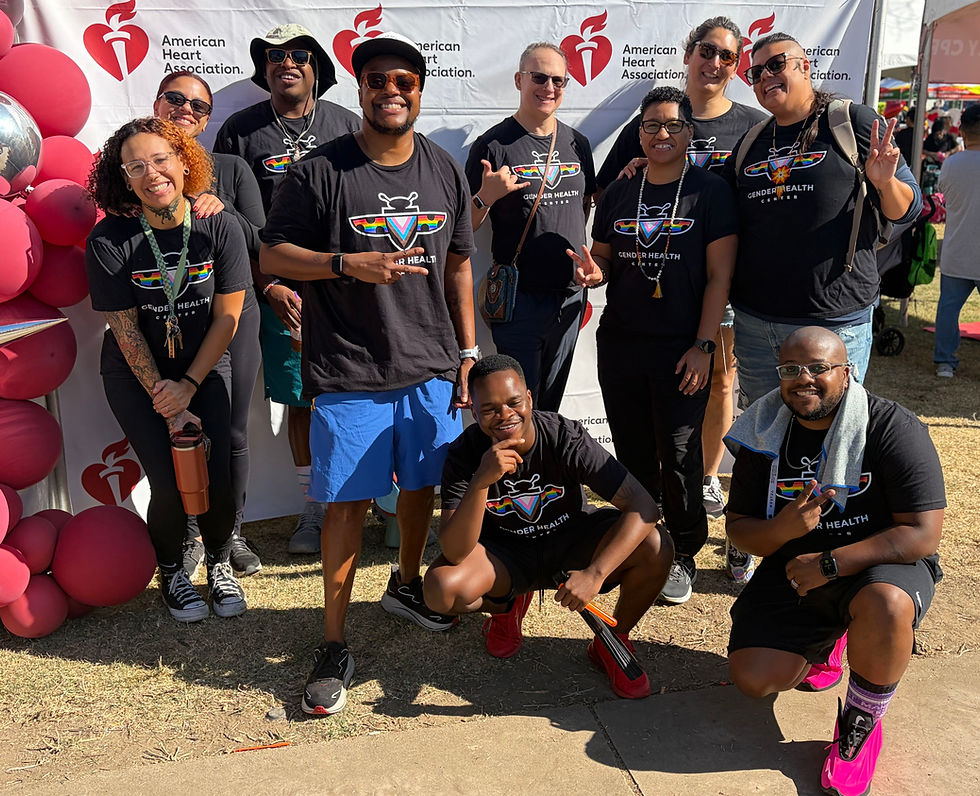
A few days after gathering around the kitchen table, we had an opportunity to put some of those ideas into motion. On Saturday, the Black Utopians Program organized GHC's participation in the American Heart Association Heart & Stroke Walk. We invited our entire community to join us because solidarity strengthens the collective. Heart health may disproportionately affect Black communities, but building the conditions for Black wellness requires people willing to walk and be alongside us.
And so we walked.
We talked.
We laughed.
We moved alongside one another and beneath Sacramento's beautiful trees in Land Park.

Some of us completed the one-mile route. Others took on the 5K. Neither was more valuable than the other. Part of wellness is learning to listen to our own bodies. What does my body desire today? What does it need to be well tended? What is the body communicating? How can I bring more nourishment and love to my embodiment? For some of us, that meant another mile and for others, it meant stopping. Both can be acts of care.
And because movement can also be joyful, we did some line dancing. We shared food afterward. We continued talking and connecting.
In that way, the walk became about more than cardiovascular exercise. It became another community space.
From Awareness to Action
There was something beautifully fitting about the movement from Wednesday's kitchen table to Saturday's walk.
We talked about health.
Then we practiced it.
We talked about connection.
Then we connected.
We talked about movement.
Then we moved.
We talked about listening to our bodies.
Then each person chose the route and pace that worked.
We talked about collective wellness.
Then we showed up for one another.
These actions may seem small, but health is built through the practices, relationships, environments, and choices we return to again and again. Our work is not to achieve some perfect version of wellness. Our work is to tend well in the moment.
To ourselves.
To one another.
To our relationships.
To our bodies.
To our spirits.
To our communities.
And sometimes tending well means remembering to play, stepping outside, scheduling the dentist appointment we have been putting off, checking the blood pressure, resting, calling someone we love, moving our bodies, asking for help, sharing a meal, volunteering our gifts, or simply sitting together around a kitchen table and telling the truth.
Our True Wealth
The Black Utopians Program will continue our Kitchen Table Conversations because dialogue can help us remember who we are to one another. But the conversation cannot end at the table. We carry what we learn into our homes, families, friendships, workplaces, organizations, faith communities, chosen families, and neighborhoods. We imagine something beyond surviving the conditions handed to us and work collectively to create something new.
For Black transgender and gender-expansive people especially, this is part of claiming something that has always belonged to us: the possibility of living fully, loving deeply, experiencing pleasure and connection, tending to our bodies and spirits, and growing older surrounded by community. That is wealth, wellness, and Black healing. And we move toward it together and united in love and in full celebration of our humanity.
Want to put your gifts into action with us? Volunteer with the Gender Health Center by completing our volunteer interest form online. The Black Utopians Program will also continue hosting Kitchen Table Conversations exploring Black health, healing, connection, and collective flourishing.
[1]: https://www.heart.org/-/media/PHD-Files-2/Science-News/2/2026-Heart-and-Stroke-Stat-Update/Translations/English/2026-Stats-Update-Fact-Sheet-US-Black-Race-and-CVD_final.pdf "2026 Stats Update Fact Sheet US Black Race and CVD"
[2]: https://professional.heart.org/en/science-news/assessing-and-addressing-cardiovascular-health-in-people-who-are-transgender-and-gender-diverse?"Assessing and Addressing Cardiovascular Health in People Who Are Transgender and Gender Diverse - Professional Heart Daily | American Heart Association"


Comments