
How Advocacy and Community Action Improve Trans Mental Health and Resilience

Too often, conversations about transgender mental health focus primarily on health inequities—higher rates of depression, anxiety, discrimination, and barriers to care. While these inequities are very real and require our attention, they tell only part of the story. An equally important question is: What supports safety, refuge, healing, and thriving?
A growing body of research suggests that resilience or resistance to oppression is not simply an individual characteristic. Rather, it is cultivated through loving and values-aligned relationships, community care, and collective action. Social justice advocacy is increasingly recognized as a pathway to health, well-being, and resilience among Two-Spirit, transgender, gender diverse, and intersex communities.
From Minority Stress to Radical Healing
Our understanding of transgender health has evolved considerably over the past four decades. Early research focused on documenting the ways discrimination, stigma, and violence contribute to health inequities. Today, researchers are increasingly asking a complementary question: What helps transgender and gender-diverse people flourish?
In 1981, social worker Virginia Brooks introduced the concept of minority stress, describing how chronic exposure to prejudice and discrimination affects the mental health of lesbian women. Building on this foundation, Ilan Meyer (1995, 2003) developed the Minority Stress Model, demonstrating that experiences such as discrimination, violence, expectations of rejection, and internalized stigma create chronic stress that contributes to poorer mental and physical health among lesbian, gay, and bisexual communities. The model has since been widely applied to transgender and gender-diverse populations and remains one of the most influential frameworks for understanding LGBTQIA+ health disparities.
While Meyer's work helped explain why health inequities occur, later scholars sought to understand what enables transgender people not only to survive but to thrive. In 2018, psychologists Em Matsuno and Tania Israel introduced the Transgender Resilience Intervention Model (TRIM), shifting the conversation toward resilience. The TRIM proposes that resilience is cultivated through factors such as self-definition, hope, family and social support, community belonging, positive role models, leadership opportunities, and participation in advocacy and activism. Rather than viewing resilience as an individual personality trait, the model emphasizes that resilience grows within affirming relationships and communities.
More recent scholarship has expanded these ideas by conceptualizing transgender resilience as a socioecological process. Researchers increasingly recognize that well-being is influenced not only by individual strengths, but also by supportive relationships, affirming organizations, accessible healthcare, mutual aid, and opportunities to participate in shaping the social and political conditions that affect one's life. In this perspective, advocacy becomes more than civic engagement but serves as a resilience pathway cultivated at the individual, community, and societal levels.
This evolution in thinking closely aligns with the Psychological Framework of Radical Healing developed by French and colleagues (2020). Drawing from liberation psychology, critical consciousness, and community psychology, Radical Healing extends beyond resilience by asking not only how people withstand oppression, but how communities reclaim well-being, joy, and liberation despite it. The framework identifies several interconnected processes, including critical consciousness, cultural authenticity and self-knowledge, hope, collectivism, strength and resistance, and visioning new possibilities for the future. Healing, in this framework, is not simply the absence of distress. It is the presence of connection, purpose, belonging, and collective action.
Taken together, these models illustrate an important progression in the science of health. Brooks and Meyer helped us understand how oppressive systems create chronic stress. Matsuno and Israel illuminated the individual and community processes that foster transgender resilience. French and colleagues further remind us that true health is not about adapting to injustice, but about working collectively to transform the conditions that produce it in the first place. Advocacy, mutual aid, leadership, and community organizing are practices that cultivate resilience, strengthen communities, and move us toward collective healing.
Advocacy is For Everyone
When many people hear or read the word advocacy, they may imagine speaking before legislators or participating in large demonstrations. While these are important forms of civic engagement, advocacy is much broader. At its heart, advocacy is any intentional action that supports the well-being, human rights, dignity, or self-determination of ourselves and others.
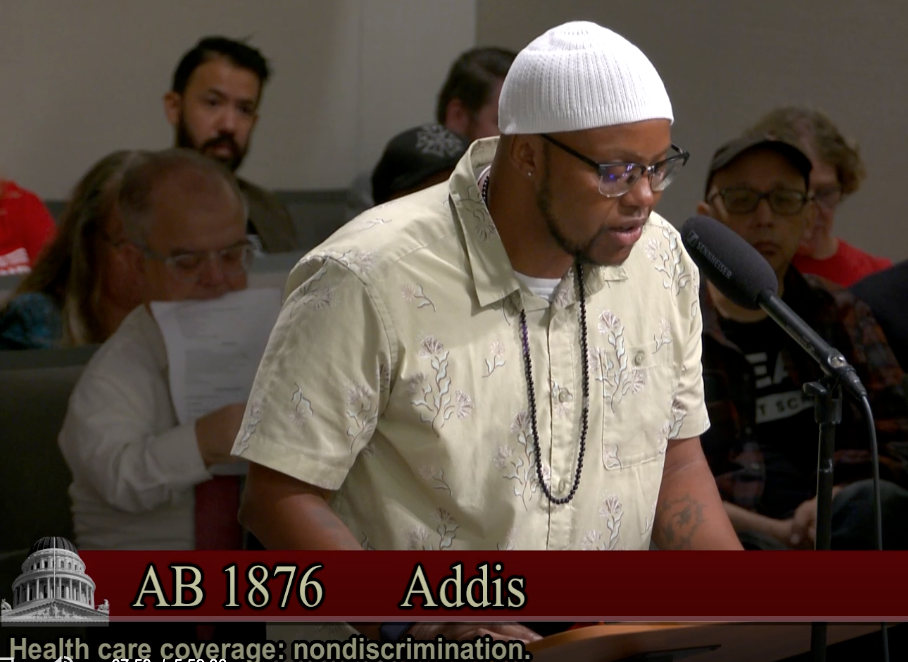
Advocacy can take many forms. It may mean making public comment during local city council, county, school board, or state legislative meetings. It may look like non-violently marching for causes you care deeply about, participating in Trans March, Pride events, and other cultural festivals, or organizing within your neighborhood. Advocacy can also be expressed through economic choices, such as supporting local businesses, participating in consumer boycotts when values are misaligned, or intentionally investing in community-owned organizations that strengthen local economies.
For others, advocacy happens through education and storytelling. Making art, writing an op-ed for a local newspaper, sharing evidence-informed information on social media, facilitating workshops, or simply helping others better understand transgender experiences can shift hearts, minds, and policies over time.
Mutual aid is another powerful form of advocacy that might include providing groceries to a neighbor, helping someone navigate healthcare, accompanying a friend to a medical appointment, offering transportation, or sharing resources and supplies so that community members can meet their basic needs. These everyday acts communicate a simple but powerful message: You deserve to be cared for.

Advocacy also exists across multiple levels. Self-advocacy involves speaking up for your own needs, setting boundaries, requesting accommodations, or communicating what supports your well-being. Developing these skills can foster confidence, autonomy, and empowerment. Individual advocacy means using your voice to support another person (with their consent) particularly when they may face barriers to speaking for themselves because of discrimination, disability, age, language access, or other circumstances. Systems advocacy extends even further by working to change organizational practices, healthcare systems, laws, and public policies so that future generations encounter fewer barriers than those who came before them.

There is no single "right" way to be an advocate. Every person has unique strengths, capacities, and opportunities to contribute. Whether your advocacy is quiet or public, individual or collective, local or national, every action that expands dignity, equity, and belonging contributes to healthier communities. These acts of courage remind us that social change is rarely created by one voice alone as it grows through countless people choosing, each in their own way, to care for one another and imagine something better.
Advocacy as Public Health: Supporting Trans Mental Health
Advocacy should not be viewed simply as political participation—it is also a public health strategy. When transgender people and our allies/friends are supported to organize, lead, educate, mentor, and advocate, we strengthen protective factors that promote mental health while advancing more equitable healthcare systems and communities.
Whether participating in Trans March, organizing mutual aid, speaking at a city council meeting, mentoring a younger community member at Trans Femme and Non-Binary Support Group, or advocating for affirming healthcare, collective action reminds us that resilience and healing is not something we build alone. It is cultivated in relationship with one another, through shared purpose, collective care, and the unwavering belief that every transgender person, just like everyone, deserves to thrive. Check out the variety of opportunities to get connected and practice your style of advocacy through the Gender Health Center's programs and offerings.
References
Brooks, V. R. (1981). Minority stress and lesbian women. Lexington Books.
French, B. H., Lewis, J. A., Mosley, D. V., Adames, H. Y., Chavez-Dueñas, N. Y., Chen, G. A., & Neville, H. A. (2020). Toward a psychological framework of radical healing in communities of color. The Counseling Psychologist, 48(1), 14–46. https://doi.org/10.1177/0011000019843506
Matsuno, E., & Israel, T. (2018). Psychological interventions promoting resilience among transgender individuals: Transgender Resilience Intervention Model (TRIM). The Counseling Psychologist, 46(5), 632–655. https://doi.org/10.1177/0011000018787261
Meyer, I. H. (1995). Minority stress and mental health in gay men. Journal of Health and Social Behavior, 36(1), 38–56. https://doi.org/10.2307/2137286
Meyer, I. H. (2003). Prejudice, social stress, and mental health in lesbian, gay, and bisexual populations: Conceptual issues and research evidence. Psychological Bulletin, 129(5), 674–697. https://doi.org/10.1037/0033-2909.129.5.674
Trans March. (n.d.). About Trans March. https://transmarch.org/about/


Comments